


MasterChef’s Joe Bastianich on New Show ‘Foodish,’ Launching at Mipcom
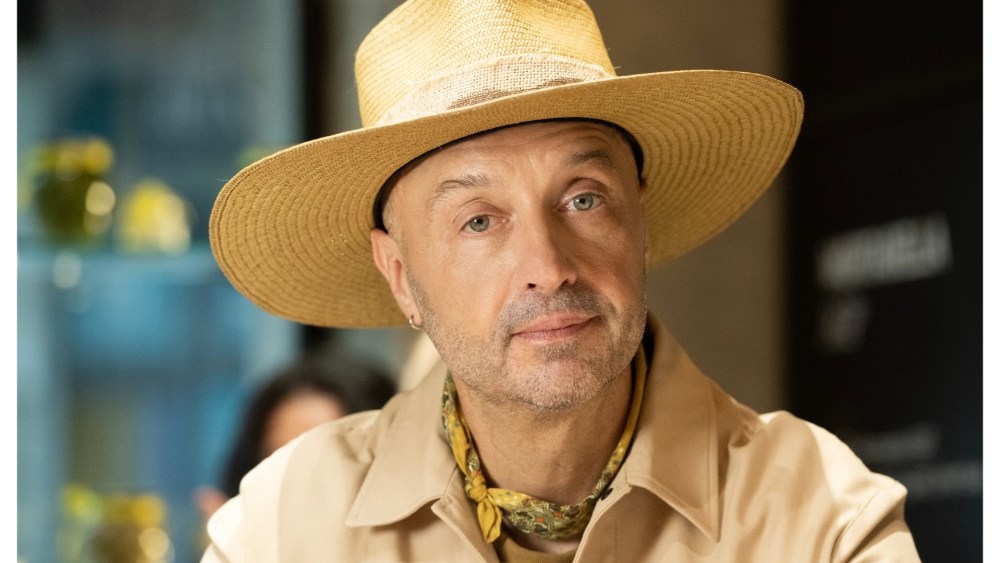
Joe Bastianich, who has long starred as a judge on “MasterChef” U.S., believe his Italian show “Foodish” could become “a potential ‘MasterChef’ lite” in terms of global reach.
Banijay is launching the format internationally at the upcoming Mipcom TV market in Cannes.
“Foodish,” which is now in its second season on Sky Italia’s free-to-air channel TV8 — where it’s reaping stellar ratings — revolves around finding neighborhood-style restaurants that make the best version of a local specialty or just any type of yummy dish, including hot dogs.
Each episode features Bastianich and a celebrity guest tasting four interpretations of the dish, and scoring each one from 0 to 10 to determine the best version in town. The four contestants compete in head-to-head duels, with the winner earning the title of “Most Foodish,” a plaque and the right to display the official “Foodish” sticker in their restaurant.
The format was conceived by Francesco Lauber, chief creative officer at Banijay Italia, who says it
stems from something that always comes up when you go to a specific city in a particular place, not just in Italy: “You want to seek out the local specialty and the best version of that local specialty. The best in town, or in a particular area,” he says.
“If I go to Monferrato [an area in the region of Piedmont] and the surrounding countryside, my friends say to me, ‘I’ll take you out to eat the best vitello tonnato (veal with tuna sauce).’ But the same thing happens with my British colleagues when they say to me, ‘I’ll take you to eat the best smashburger in London.’”
Below, Variety speaks with Bastianich about the “Foodish” format and why he thinks it can travel.
What attracted you about the proposal to host “Foodish” in Italy?
It was the opportunity to do a daily show that was on primetime access, so a different time slot than I’d done in the past, which have mostly been primetime shows like “MasterChef” and otherwise. I’d been out of the Italian food television thing for a while. This seemed like, after “MasterChef,” the right way to kind of pop back in: right format, right time slot, creative, cool, new, fresh. That’s what interested me.
How would you describe the format in a nutshell?
It’s basically King of the Hill on a dish. So you pick a plate, a dish, any single iconic food item, and you go and find the best one. You have four contestants. Whoever is first meets the second and the best of the two goes ahead, onwards until the fourth and then you have a champion. So it’s super simple.
It’s very much orientated on the deliciousness of the food, so a lot of food porn. A lot of iconic food items — that can be really Italian stuff, like gnocchi in Genova or, you know, cheeseburgers in Rome, whatever it is. It can be ethnic, it can be international, it can be fine dining. It can be street food. It can be anything, which is what’s nice about it. There’s no studio, no shiny floor. The interaction happens in the car, in which we bring the chefs from one restaurant to the other. It’s super fast. You meet a lot of people. And then there’s the variability of the guest, which makes it really interesting. You have a guest every episode that pertains to the location and to the dish. Somehow, generally, people almost always that are not chefs and not from the food world. So people from sports, entertainment, cinema, television, what have you. And then we try to create a point of entertainment. So banter, themes we share in common, running jokes. It’s a little bit within the evolution of using food and a food story to create entertainment.
What makes the “Foodish” format stand out in an international context?
It’s just the pliability of it. Like, I imagine doing it in Bangkok in a tuk tuk. You could do it in New York City in a yellow cab. Without this whole studio component, you can really do it anywhere and adapt it to any cultural or entertainment necessity context. So it’s very, very pliable. The production costs are relatively lower than a studio show. The amount of infrastructure you need to do it is probably three to five cameras. It’s pretty snell. You can create content that has super high value considering the time it takes to make a show and the budget that goes behind it. So high quality, high value product. Quick to make. Pliable for any culture or location in the world. It’s a potential “MasterChef” lite. It’s that pliable.
This interview has been edited and condensed for clarity.
