


Fandango Sells Margherita Spampinato’s ‘Sweetheart,’ a Locarno Title
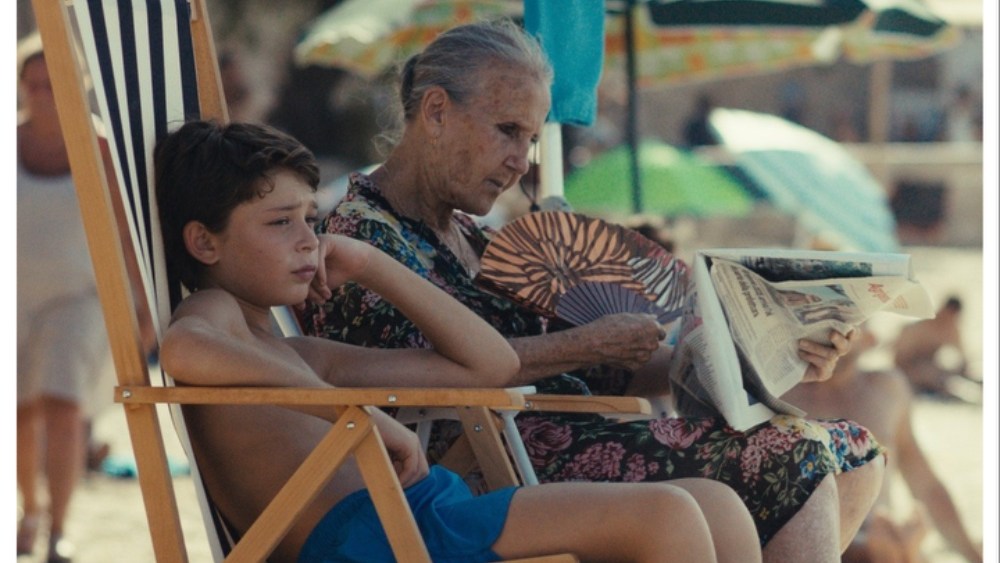
Fandango has sold Margherita Spampinato’s Locarno title “Sweetheart” (“Gioia mia”) to multiple territories.
Produced by Benedetta Scagnelli and Alessio Pasqua for Yagi Media and Arcopinto, in initial sales deals, “Sweetheart” has been picked up for Brazil (Pandora), Benelux (Arti Film), Taiwan (Av-Jet), Argentina, Chile and Uruguay (Zeta Filmes) and Israel (Lev Cinema).
All fell for the sun-drenched story of a young boy (Marco Fiore) and an elderly woman (Aurora Quattrocchi), forced to spend a summer together.
Their initial wariness soon gives way to friendship and, to Nico’s amazement, a mysterious house, where aunt Gela lives with her faithful dog, is actually full of secrets; and, some claim, vengeful Sicilian spirits.
Spampinato discussed her feature debut with Variety at Locarno, where the film premiered in the Filmmakers of the Present competition, dedicated to emerging directors.
“I don’t have family in that exact same place, but I do in Sicily. Still, it was my friend who found that location. I visited it and said: ‘Well, that’s crazy.’ Everything was already there – even a long corridor I described in the script. Its owner, a 65-year-old lady, said about the story, ‘This is my childhood,’” she recalled.
“Her grandfather used to live there and this was a way to commemorate the place before she had to sell it. All these beautiful things you see in the film, and even some family photos, are hers.”
With the exception of Palermo-born Quattrocchi – seen in Mario Martone’s “Nostalgia” and spotted in “The White Lotus” – Spampinato was looking for non-professional actors to cast in the film.
“It was because of their faces and because of their truth,” she said.
“We held a casting in [Sicilian city] Trapani, looking for real grandmothers, nonnas. They were adorable and really enjoyed staying together. They were always on set, even when it wasn’t needed. Also, they always encouraged me. They always called me gioia mia, my joy, too. That part [of making the film] was really magical.”
She added: “When I told them we were selected by Locarno, they just said: ‘We always knew it would work out.’ They are in their eighties and frail, but they said making the film was good for them – it took away some of their pain.”
The ladies, playing Gela’s neighbors and friends, reminded her of her own childhood.
“When I was little, I used to go to Sicily in the summer to visit all my ‘grandmothers’. They were very affectionate, not like Gela, and they would dress me up, like a doll. My mother was a feminist and then I would go there and turn into this little girl, taking naps in my embroidered pajamas,” she laughed.
She wanted to stay close to the child’s perspective in the film.
“The really interesting thing about children is that they really understand the hidden meaning of things. I was inspired by my son and his friends who are that age. If I take him to a dinner party and my friends are there, he can tell who’s in love. Children can be so intuitive – they see beyond words.”
And yet their emotions, or opinions, are often undervalued.
“Nico’s going through a transition because of his age. He’s leaving his childhood behind. He’s in between this magical place where children see a shadow and imagine a ghost or a monster, but he’s also growing up.” And still reeling from the departure of beloved babysitter.
“He enters this irrational world as a new generation, which rationalizes everything – even the spiritual realm. For Gela, the spirits represent the fear of something. For a child, something completely different. But in the end, I believe that all our fears must be faced.”
At first, they are perfect strangers, suddenly living under the same roof. Later, they get to know each other “on a very deep level.”
“After all, she’s not his grandmother. There’s this stereotype of how a grandmother should behave, but this character doesn’t really exist. My grandmothers weren’t like that, either. They could be difficult. Also, I liked the idea of talking about a woman – a woman in her 80s. They are very interesting!”
Making the film was an adventure, admitted Spampinato. “For me and also for them,” she said, recalling working with amateurs and children, something many directors are still afraid of.
“And dogs! The dog was marvellous,” she laughed.

“Sweetheart”
©Yagi Media
