


Netflix Doc Examines 2019 Trial
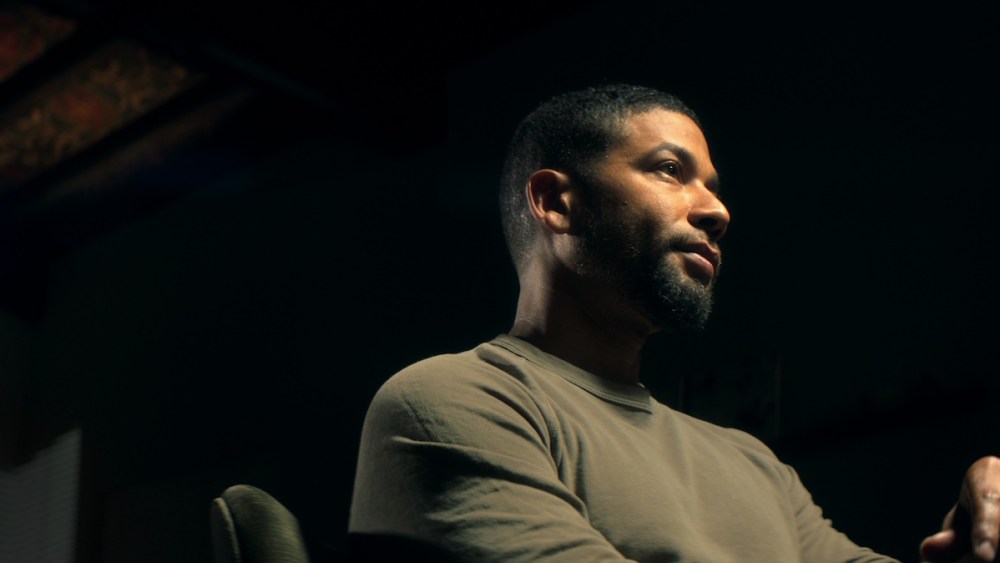
The story of Jussie Smollett had the effect of sucking one individual into a near-perfect storm of discursive tripwires. The “Empire” actor first being believed the victim of a hate crime in 2019, then charged with having faked it, was a case that touched on race, sexuality and fame, all at a moment where America was primed for a reckoning. (Smollett’s claim of having been attacked with a noose on the streets of Chicago, and then the legal consequences as law enforcement believed he was lying, fell a year and change before the George Floyd protests of 2020 made clear how much tension had been crackling underneath the nation.)
The case was, in other words, perhaps too charged to see clearly in its moment. And with the benefit of hindsight — with Smollett now free and with his conviction reversed on a technicality by the Illinois Supreme Court last year — “The Truth About Jussie Smollett?” on Netflix attempts to provide some clarity. But the question mark in its title is doubly significant. First, the filmmakers cannot (though not for lack of trying) come to a satisfying conclusion. You’ll likely close the tab as the credits roll thinking what you did before the documentary started, which they’re trying to foreground with a punctuation mark. That this punctuation is, frankly, a little clumsy is also a key part of the experience of this doc, which gathers plenty of raw reporting, but assembles it into a story only as best it can, ultimately undone by the challenges its particular story presents.
Say this much: The project, from the producers of past Netflix docs “The Tinder Swindler” and “Don’t F**k With Cats,” gathered the key players effectively. Smollett himself appears, as do lawyers on both sides of the case, as well as Chicago law enforcement officials. And it has a structure that’s effective in a sort of courthouse way, where the film, roughly speaking, first presents the case against Smollett, then doubles back on his potential defense. A piece of key evidence at the end, though, sums up the crucial challenge of the case: Those who defend Smollett see it as depicting a white figure emerging from a cab on the night of the attack, while Chicago law enforcement, watching it, say that it’s the Osundairo brothers, the Black men alleged to have executed the hoax with Smollett. (They say they were in on it; Smollett denies it, and claims that certain evidence, like a check he wrote just prior to the attack, were part of a loose and informal business relationship.) The documentary lands in a place where its subject is the mystery and not its solution.
Which is a fine place to be, if a familiar one! But the challenges the documentary faces lie, first, in its subject. Smollett did or did not fake the attack; if that is knowable information, it is not knowable to this viewer. But he seems overmatched at times in trying to make the case, appealing simply to viewers’ faith in him. “I know what I saw,” he says, and various versions like it, in claiming that his attacker, contrary to evidence that had been available to this point, was a white MAGA supporter. That he hasn’t had proof to support this is unfortunate, but his singleminded appeal to the viewer leaves out any of the other things documentaries can do besides solve crimes or exonerate people. We’re left with no real sense of who he is or what he meant to the culture, or why his clearing his name might be significant. If the mystery is the subject, it ought to have a little bit more, well, mysteriousness to it than the binary question of “Did Smollett do it?,” and the evidence from the man in question, “He says he didn’t.”
But then, whether one believes him or not, it’s hard not to feel for Smollett, caught up as he was in a story that grew far larger than him. Where the documentary does excel is in its speedy ability to draw out and characterize the various personalities lurking around the case, though its eye for the revealing detail can at times turn into a leer. (The Osundairo brothers, who after the incident became marginal conservative-media hangers-on, see so many of their infelicitously phrased utterances make it to air that the point the filmmakers have about them seems made a bit overzealously.)
And it does a fine job, too, at making the case that the story took on a life of its own thanks in part to the untrustworthiness of the Chicago Police Department, which was as the Smollett story first played out facing public outcry over their dishonest handling of the killing of teenager Laquan McDonald. The journalist Josie Duffy Rice provides particularly elegant commentary here, and a late-in-film reveal that a high-level police source we’ve been following may have deep trustworthiness issues is a well-timed rug-pull moment.
But for all that pops in this documentary, there’s as much that feels soggy or obvious. The film, at 90 minutes, feels a bit long, and one wishes that the line of questioning posed to Smollett might have moved deeper into the effects of the case on his life or the shift in how he is publicly perceived, as his own insights fail to compel. (As my colleague Tatiana Siegel noted in her recent profile of Smollett, he is intriguing both because of and entirely outside of his legal travails; here, he stumbles when addressing the travails and isn’t allowed to share a perspective even an inch beyond them.) The additions to our understanding of the Smollett case this documentary provides are small-bore: It attracted attorneys who love fame, it was a Rorschach test for how Americans view race, it frustrates attempts to figure out what really happened. But we knew all that already.
“The Truth About Jussie Smollett?” premieres on Netflix on Aug. 22.
