


‘Kneecap’ Producer on The Negotiator Doc on Peacemaker George Mitchell
The groundbreaking anarchic, drug-soaked and political semi-biopic “Kneecap” opened the Galway Film Fleadh in 2024 on its way to a BAFTA award and a chance at an Oscar nomination, having been submitted by Ireland and making the Academy’s international film shortlist.
While Kneecap the band are still touring (they recently played at Glastonbury) and sparking headlines as they go, the film’s producer Trevor Birney returns to Galway this week with an altogether different project.
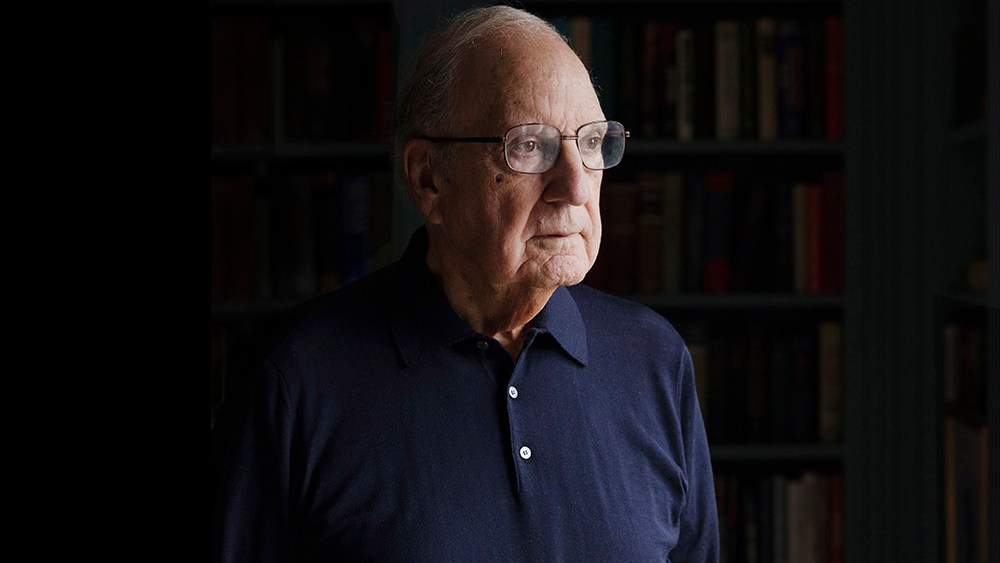
“The Negotiator” is a feature doc telling the story of George J. Mitchell, the U.S. senator who was instrumental in what would become 1998’s Good Friday Agreement that brought an end to the Troubles in Northern Ireland. The film charts Mitchell’s journey from Maine to Washington D.C. to almost six years as senate majority leader to being selected by Bill Clinton as the special envoy for Northern Ireland. But it also puts what was achieved in a wider context, examining the role of the U.S. in resolving global conflicts and the efforts required to find peace where it would seem an impossible task.
For Birney, who alongside “Kneecap” has produced docs including the “Let the Canary Sing” about Cyndi Lauper and Alex Gibney’s “No Stone Unturned” about an unsolved Irish mass murder in 1994, “The Negotiator” took him back to his roots as a journalist.
In 1994, Birney was working as a radio reporter in Northern Ireland and remembers seeing an “exotic-looking guy” turning up in Belfast and at the time thinking: “What are you doing here? What have you signed up to?” Up until then, most of the politicians sent over to Ireland “were very aloof, stern British government ministers” who had usually “crossed Margaret Thatcher and had been dispensed to Belfast as punishment.”
But in Mitchell, he saw someone different. And his arrival came during a period of hope. An IRA ceasefire had come into effect in August 1994, but Ireland was also experiencing a booming economy, while the Irish soccer team had just made it to the last 16 of the World Cup having famously beaten Italy in the group stage.
“There was an incredible sense of relief and belief that, maybe, this could be different,” he says. “And in some ways George Mitchell epitomized that difference. Because why would he come and spend time here if all we’re going to do is going to go back to killing each other?”
In the end, it did prove to be different.
As “The Negotiator” shows, Mitchell was able to succeed in Ireland because of his quiet determination and patience when it came to the negotiations, his ability to work with and get to know all the various factions involved, whether it be Gerry Adams or those representing the loyalist paramilitaries, and a healthy splash of charm. Other politicians such as Tony Blair and Bertie Ahern had hugely important roles to play, but for Birney, the guy in the middle of it all — the “ringmaster” — was Mitchell.
Birney spoke to Mitchell several times as a journalist during the peace process (he even received a signed letter of thanks from him afterwards — one of several he sent to reporters covering what was happening). But he said he only had the idea to make a biopic a quarter century later after seeing Mitchell speak at Queen’s University to mark the Good Friday Agreement’s 25th anniversary.
“He was in his late 80s, and he said, ‘I think this is going to be my last time coming to see you. I’ve battled leukemia, I’ve had lots of health issues and I don’t think I’m going to be able to come back,’” recalls Birney. “And I sat in the audience and went, my God, we’ve got to tell this guy’s story. Because I could see the love and the emotion that was in the room for him.”
As Mitchell reminded the crowd that had come to hear him speak, the Good Friday Agreement has proved to be shining example of exactly what can be achieved. In the 25 years before it was signed, more than 3,500 people lost their lives in the Troubles. In the 25 years that followed, it was less than 200.
So while Birney wanted to tell the remarkable life story of Mitchell, the man from Maine who had helped end decades of violence in Northern Ireland, he also wanted to use the film to explain what it takes to be at peace and how you negotiate to bring it about.
“Because I think that’s a very important contemporary message,” he says. “And I think there’s never been a more relevant time for us to consider what it takes to make peace with your enemies when you look at the world today. We need more George Mitchells.”
As Birney also asserts, with wars raging in the Middle East, Africa and Ukraine, America needs to get more involved in peacemaking like it did back in the 1990s rather than taking sides and pouring fuel on conflicts.
“What happened in Northern Ireland is a fantastic example American soft power. That’s what America can achieve and it should really use its might and it power to bring peace, not to make more war and to arm countries around the world,” he says. “What it should be doing is sending peacemakers like George Mitchell out to help us all come to terms with our past and help us all create a new future. That’s what George Mitchell did. And that’s what this documentary is all about.”
“The Negotiator” — which following its screening in Galway is eyeing a festival run, including in the U.S., before a sales company is attached later in the year — may appear on the surface level to be a wildly different film from Birney’s last feature “Kneecap” (although Gerry Adams does appear in both, in news clippings and as a talking head in “The Negotiator” and in “Kneecap” during a ketamine-induced hallucination). But as the filmmaker points out, the two are inextricably linked, the latter only made possible because of the events outlined in the former.
“Kneecap would not be Kneecap if it wasn’t for what George Mitchell did in 1998,” he says. “Kneecap would not be ceasefire babies if George Mitchell had not pushed and pushed and pushed and pushed with those political parties to make peace.”
